Why Organic SEO Content Beats Paid Ads Long Term: The Asset vs. Expense Verdict for 2026
Why Organic SEO Content Beats Paid Ads Long Term: The Asset vs. Expense Verdict for 2026
June 19, 2026
Why Organic SEO Content Beats Paid Ads Long Term: The Asset vs. Expense Verdict for 2026
Introduction: The Question Every Growth-Stage Business Must Answer
Every dollar spent on paid advertising disappears the moment a campaign pauses. Every dollar invested in organic content keeps working long after it was spent. That single distinction sits at the center of the most consequential marketing decision a growth-stage business will make in 2026, and most advice on the subject refuses to take a side.
The industry consensus has settled into a comfortable cliché: “use both.” It is safe, it offends no one, and it conveniently fails the businesses that need real guidance most. Companies with finite budgets and genuine growth pressure cannot afford to spread thin capital across channels with wildly different return profiles. They need a verdict, not a hedge.
Here it is, stated plainly: organic SEO content is a compounding capital asset, while paid advertising is a perpetual operating expense. For a business building toward sustainable growth, fundraising, or an exit, that classification is not a semantic nuance. It is the most important strategic decision in the entire marketing stack.
This article makes the case across four structural arguments: the renting-versus-owning economics that govern both channels, the CPC inflation crisis quietly eroding paid budgets every quarter, the B2B revenue attribution data that exposes how undervalued organic content truly is, and the emerging AI citation advantage that paid advertisers literally cannot buy. The argument rests on hard data from BrightEdge, FirstPageSage, HubSpot, Gartner, and Edelman, not opinion.
The Asset vs. Expense Framework: Renting Traffic vs. Owning It
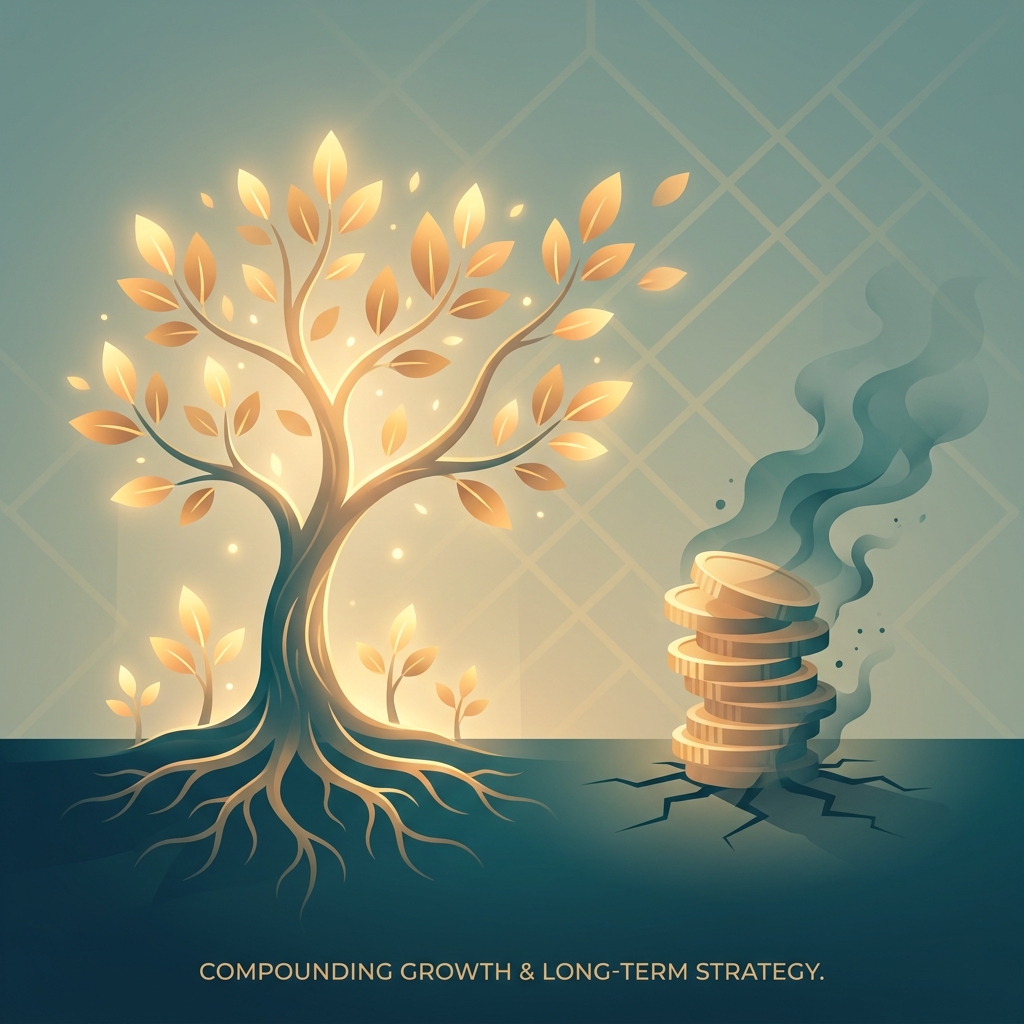
Paying for ads is renting a storefront. The location may be excellent and the foot traffic strong, but the moment the rent stops, the doors close and the visibility vanishes. Investing in organic content is buying property. It appreciates over time, generates returns without ongoing payment, and can be counted as value when the business is sold.
The metaphor holds because the data does. Once paid ad budgets stop, traffic drops to zero within 24 hours. Organic rankings, by contrast, continue delivering visitors long after the initial content investment is made. Businesses that invest consistently in organic content typically see 40 to 60 percent traffic increases year over year, while PPC traffic resets to zero with every budget pause.
The financial proof point is even sharper. Organic SEO costs roughly $31 per lead, compared with $181 per lead for PPC, a 5.8x efficiency advantage that only widens as content matures. After six months of consistent organic investment, that cost per lead compresses to just $1.12, a figure no paid channel can structurally replicate. Paid acquisition cost stays flat or rises; organic acquisition cost trends toward zero.
Return on investment follows the same pattern. Content marketing returns an average of $3 for every $1 spent, while paid advertising returns just $1.80, a 67 percent performance advantage that compounds as the content library grows.
There is a final, often-overlooked dimension: valuation. Durable, low-cost organic traffic improves EBITDA multiples and strengthens company valuation metrics. A business that depends entirely on paid ads owns nothing when the spending stops. A business with a mature content asset owns a revenue-generating property that survives due diligence.
The CPC Inflation Crisis: Why Paid Ads Are Getting More Expensive Every Quarter
Rising paid advertising costs are not a temporary market fluctuation. They are a structural, systemic feature of the auction model, and they make paid advertising a progressively worse long-term investment with each passing quarter.
The headline numbers are unambiguous. According to Digital Applied, Google Ads average CPC rose 12 percent year over year to $2.96 in Q1 2026, up from $2.64 in Q1 2025, with projections of an additional 8 to 10 percent increase by Q4 2026. The practical effect is significant: a $10,000 monthly PPC budget now buys roughly 10.7 percent fewer clicks than the same budget did just twelve months earlier. The same spend delivers less every year.
Competitive verticals are worse. Legal services average between $6.75 and $18.50 per click. B2B SaaS high-intent keywords can cost between $75 and $150 per click. In tech, healthcare, and finance, CPC rose 18 to 25 percent year over year in 2025 alone.
Contrast that trajectory with organic content. While paid cost-per-click climbs every quarter, the marginal cost per organic visit approaches zero as content ages and rankings compound. The two curves move in opposite directions: one perpetually rising, one perpetually falling.
Consider a simple 36-month model. A business spending $10,000 per month on PPC spends $360,000 over three years and owns nothing at the end. The same investment directed into organic content builds a durable traffic asset with a reported 702 percent average ROI for B2B SaaS over 36 months, according to FirstPageSage benchmarks. For a deeper look at how predictable SEO results from content marketing compound over time, the underlying mechanics are worth understanding before committing to a channel strategy.
The legitimate counterargument is timing: paid ads deliver traffic immediately, while organic content takes months to mature. That is true, but it is a timing issue, not a strategic argument for allocating budget to paid-first.
The Traffic and Trust Gap: Why Organic Clicks Are Worth More
The disparity between organic and paid begins at the click. The number-one organic Google result captures a 39.8 percent click-through rate, while the top paid ad averages just 3 to 6 percent. Organic listings receive up to 20x more clicks than paid results.
That advantage scales to total traffic. Organic search accounts for 53.3 percent of all website traffic globally, while paid search captures only 5 to 15 percent, despite $211.76 billion in global ad spend in 2024. Users are not splitting their attention evenly; they overwhelmingly choose organic results.
Trust drives the gap. More than 70 percent of users trust organic results more than paid ads, and 94 percent of all Google clicks go to organic results. This is not a soft preference; it is a durable behavioral pattern that compounds brand authority over time.
Conversion quality reinforces the case. Organic traffic converts at a 2.8x higher rate than paid traffic in B2B contexts. In financial services, SEO converts 7.3x more than PPC, and in legal services, 3.4x more. More than 80 percent of B2B marketers believe SEO generates better-quality leads than PPC, because users who arrive through organic search are already further along in their own research.
Two final figures cement organic search as the anchor of any serious content strategy: 85.19 percent of all blog traffic comes from organic search, and organic search generates 1,000 percent more traffic than organic social media.
The B2B Revenue Attribution Case: Organic Content Drives More Revenue Than Any Other Channel
For B2B businesses, the most powerful data point is also the most ignored: organic search generates 44.6 percent of all revenue attributed to digital channels, more than double any other single marketing channel. Organic search is also responsible for 76 percent of all trackable B2B website traffic, making it dominant by both volume and revenue.
So why is organic content so frequently undervalued in marketing dashboards? The answer is attribution. According to research cited by OmniBound, 56 percent of B2B marketers struggle to attribute ROI to content because of last-click attribution models. These models credit only the final touch before conversion, systematically erasing the role of organic content earlier in the journey.
The corrective lens is buyer-journey sequence data. The path Organic > Whitepaper > LinkedIn > Demo achieves a 65 percent close rate, compared with just 22 percent for LinkedIn > Demo alone. Organic content is the highest-value first touch in complex B2B sales cycles. When businesses cut organic content because it does not appear to “close” deals, they are removing the first touch that makes every subsequent touch possible.
The lead-generation multiplier is equally compelling. Companies with active blogs generate 67 percent more leads monthly than those without, and companies publishing nine or more posts monthly see 35.8 percent year-over-year traffic growth. B2B SaaS SEO averages 702 percent ROI over 36 months with a 7-month break-even, while thought leadership content delivers approximately 748 percent ROI with a 9-month break-even. Businesses looking to scale content marketing for B2B SaaS will find the attribution case for organic investment particularly compelling at this stage of the analysis.
The AI Search Advantage: The Structural Tailwind Paid Advertisers Cannot Buy
Most competitors treat AI search as a threat to organic content. They have it backward. The rise of AI-generated results is the single most powerful structural tailwind organic content has ever had.
The defining statistic comes from Edelman, cited by Superlines: 90 percent of AI citations driving brand visibility originate from earned and owned media, not paid placements. Organic content is the primary currency of AI search visibility, and no advertising budget can purchase it.
The scale of the shift is staggering. BrightEdge data from April 2026 shows AI agent requests have reached 88 percent of human organic search activity, with AI agents projected to surpass human-driven search by the end of 2026. Meanwhile, Google AI Overviews coverage grew 58 percent year over year between February 2025 and February 2026, with B2B technology queries triggering AI results jumping from 36 percent to 82 percent, according to Search Engine Journal. Businesses with strong content libraries are being cited; those without are invisible.
Gartner predicts traditional search engine volume will drop 25 percent by 2026 due to AI chatbots, but also emphasizes that content quality and authenticity become more critical in this environment, not less.
Paid advertising’s position is actively deteriorating. Paid ads appear above AI Overviews only 23 percent of the time, meaning AI-generated answers are pushing paid placements further down the page. This gives rise to the concept of citation equity: businesses investing in authoritative organic content today are building a compounding asset in AI search visibility, a new form of top-of-funnel dominance no ad spend can replicate. AI-sourced traffic also converts at 4 to 5x the rate of traditional organic traffic, making citation equity both a visibility win and a revenue-quality win.
When Paid Ads Still Make Sense (And How to Sequence the Two Channels)
Paid advertising has legitimate uses. Product launches that require immediate visibility, time-sensitive promotions, keyword testing that informs organic strategy, and cash-flow-critical early-stage businesses with no organic foundation all justify paid spend.
The optimal approach is sequencing. Use paid ads early to collect data and generate immediate revenue while simultaneously building organic content as the long-term asset. Then systematically reduce paid dependency as organic rankings compound. This is a capital allocation decision, not a question of channel loyalty. The objective is to shift spend from operating expenses toward capital assets over time, improving both margins and valuation.
The urgency to shift is highest in verticals where SEO converts 7.3x more than PPC, such as financial services. Because content lifecycle extensions through updates and refreshes improved organic traffic by 28 percent in 2025, organic content assets appreciate with maintenance while paid campaigns depreciate the instant they pause.
To the “we cannot wait” objection: the 7-to-9-month break-even on organic content means a business starting today will own a compounding asset before the fiscal year ends. Every month of delay only extends the paid dependency cycle.
The Real-World Numbers: What the Data Shows Across Industries
The economic argument is not theoretical. Real-world SearchLight dashboard data from CI Web Group, covering home service businesses from January to April 2025, showed SEO returned $19.90 per dollar spent versus $4.40 for paid ads, nearly 5x better return at a fraction of the cost per paying customer.
The B2B SaaS benchmark of 702 percent ROI over 36 months with a 7-month break-even reinforces the pattern, as does the thought leadership benchmark of roughly 748 percent ROI with a 9-month break-even. According to SEO Sherpa, industry-specific peaks go even higher: medical devices reach 1,183 percent ROI and industrial IoT hits 866 percent, proving the compounding asset argument is strongest in high-CPC, long-cycle B2B verticals.
The broader market context confirms the direction of travel. The content marketing market reached $524.73 billion in 2025 and is growing at a 13.53 percent CAGR, projected to hit $989.84 billion by 2030. The lead-cost comparison summarizes the entire case: $31 per lead organic versus $181 per lead paid, compressing to $1.12 after six months of maturity. Businesses that want to benchmark their own numbers can use an SEO content ROI calculator to model the break-even timeline against their current paid spend.
How to Build Organic Content as a Compounding Business Asset in 2026
Understanding why organic content wins is only useful if a business can execute. Compounding organic content rests on three structural requirements: consistent publishing volume (nine or more pieces monthly drives 35.8 percent year-over-year growth), topical authority built through interconnected content ecosystems rather than isolated pages, and GEO optimization that makes content eligible for AI citation.
This is where most growth-stage businesses stall. A lean marketing team of one to five people cannot sustain the publishing volume that compounding results demand through manual production. The strategy is sound; the bandwidth is not.
AI content automation closes that execution gap. Platforms that automate research, writing, optimization, and publishing allow growth-stage companies to compete at content volumes and quality levels once reserved for enterprise teams. Understanding how to build a content engine that operates at this scale is the practical bridge between the strategic case made throughout this article and the results the data promises. This is precisely the problem KOZEC was built to solve. Its SCO (Search Compliance Optimization) framework prioritizes Google-recommended practices over algorithmic shortcuts, while its GEO (Generative Engine Optimization) layer structures content for visibility in Google AI Overviews, ChatGPT, and generative search, with topical authority signals, proper internal linking, and schema markup that AI systems can parse and cite.
The speed-to-asset advantage matters most here. With a 7-to-9-month break-even, the sooner a business starts, the sooner compounding returns begin. Delay is the most expensive choice a growth-stage business can make. Because refreshing existing content improved organic traffic by 28 percent in 2025, organic content is not a one-time expense but a managed asset that grows in value with attention.
Conclusion: The Verdict Is In, Organic Content Is the Superior Long-Term Investment
For growth-stage businesses with finite budgets and long-term ambitions, organic SEO content is the superior financial investment. Not because paid ads fail to work, but because they depreciate the instant the spending stops, while organic content compounds indefinitely.
The argument rests on four pillars: the renting-versus-owning economics and CPL compression; the CPC inflation crisis eroding paid purchasing power every quarter; the B2B attribution data showing organic drives 44.6 percent of digital revenue; and the AI citation advantage no ad budget can buy. Paid ads retain a role in early-stage growth and immediate revenue generation, but for any business with a 12-to-36-month horizon, the imperative is to shift budget from operating expenses to content assets.
As AI agents surpass human-driven search by the end of 2026, the businesses that built authoritative content libraries will be cited in AI answers, while those that leaned on paid placements will watch their visibility structurally diminish. The question is no longer whether organic content beats paid ads long term. The data has answered that. The question is how much longer a business can afford to delay building the asset that will define its competitive position in the AI search era.
Ready to Turn Your Content Into a Compounding Business Asset?
The execution gap is the only thing standing between a growth-stage business and a compounding content asset, and KOZEC was built to close it. Traditional SEO agencies charge $8,000 to $15,000 per month for just 8 to 12 articles. KOZEC delivers 15 to 60-plus articles per month at $600 to $1,500 per month: the same compounding asset strategy at a fraction of the cost.
KOZEC’s GEO optimization framework structures every piece for visibility in Google AI Overviews, ChatGPT, and generative search, building the citation equity identified throughout this article as the most important emerging advantage in search. Early platform users report +215 percent organic traffic growth, +287 percent traffic value growth, +621 percent keyword visibility growth, and +386 percent AI Overview citation growth.
Setup takes days, not months, with no long-term contracts. Every month of delay is a month further from the 7-to-9-month break-even point where organic content begins delivering compounding returns. The best time to start was nine months ago. The second best time is today.
Schedule a demo at kozec.ai/schedule-a-demo/ to see how KOZEC builds a compounding organic content asset.
Stay In The Loop
Subscribe to our free newsletter.
Stop Managing SEO - Start Scaling It
Let KOZEC handle strategy, content, and execution - so you can focus on growth.
Automated SEO content for growing agencies.
KOZEC helps agencies, consultants, and growing brands publish high-quality SEO content on autopilot — so your site ranks higher and converts more visitors.
Managing SEO content for many client websites doesn’t scale with traditional methods. Writers are expensive and inconsistent, keyword research is time-consuming, and publishing requires multiple manual steps. As agencies grow, maintaining both quality and consistency becomes increasingly difficult. KOZEC (Keyword Optimized Zero Effort Content) solves this by automating analysis, keyword discovery, content creation, and publishing—so your clients get reliable SEO content while your team focuses on growth.
Increase organic traffic without manual content creation
Publish keyword-optimized posts automatically to WordPress
Turn SEO into a predictable, scalable growth channel