SEO Content for AI-Driven Search Discovery: The Citation Economy Playbook for 2026
SEO Content for AI-Driven Search Discovery: The Citation Economy Playbook for 2026
July 27, 2026
SEO Content for AI-Driven Search Discovery: The Citation Economy Playbook for 2026
Introduction: The End of the Ranked Link Era
By 2026, brand visibility is no longer primarily determined by where a page ranks. It is determined by whether a brand gets cited inside AI-generated responses across Google AI Overviews, ChatGPT, Perplexity, and Microsoft Copilot. The rules of discovery have quietly changed, and most content strategies have not caught up.
The scale of the shift is staggering. Google AI Overviews now appear on 47 to 64 percent of all search queries, climbing past 70 percent in informational verticals like health, finance, and technology. At the same time, the click has become an endangered species. Somewhere between 58.5 and 68 percent of all Google searches now end without a single click. When AI Overviews are present, that zero-click rate jumps to 83 percent. In AI Mode, it reaches 93 percent.
This is what the “citation economy” looks like in practice. The competitive objective is no longer a ranking position. It is earning a citation slot inside a synthesized AI answer that millions of users read and never scroll past. If a brand is not named in that synthesized answer, it effectively does not exist for the majority of searchers.
The central argument of this playbook is straightforward: winning in AI-driven search discovery requires a content ecosystem architecture, not a collection of individually optimized pages. AI systems cite brands that demonstrate topical authority across an interconnected web of content, not brands that polish a single page and call it done.
The hard part is execution. Ninety-four percent of enterprises plan to increase their generative engine optimization (GEO) investment in 2026, yet creating AI-optimized content at scale remains the number one unsolved challenge. This article delivers the framework and the operational roadmap to close that gap.
What the Citation Economy Actually Means for Your Brand
The citation economy is a competitive landscape where brand visibility is earned through inclusion in AI-generated responses rather than through organic ranking positions.
The mechanism is fundamentally different from the old model. AI systems, whether Google’s AI Overviews, ChatGPT, Perplexity, or Microsoft Copilot, do not rank pages. They synthesize answers from sources they deem authoritative, trustworthy, and topically comprehensive. There is no “position one” to win. There is only inclusion or exclusion from the answer.
The business stakes are direct and measurable. Brands cited in AI Overviews earn 35 percent more organic clicks and 91 percent more paid clicks compared to brands not cited. AI citation is not a vanity metric. It is a revenue driver.
In the ranked-link era, a single well-optimized page could capture a keyword and hold it. In the citation economy, one page is not enough. AI systems weight brands that appear consistently across multiple authoritative contexts. This creates a dual-audience reality: SEO in 2026 is effectively two jobs, driving clicks from human users and supplying clean, trusted inputs for AI agents that may never visit a brand’s site directly.
There is also a brand trust dimension that cannot be ignored. AI summaries often form the first impression of a brand for millions of users. An inaccurate or absent citation can spread across multiple generative systems simultaneously, making proactive AI visibility management essential rather than optional.
The discovery channel itself has shifted. Thirty-five percent of users now say AI is more useful than search engines for discovering new brands, versus only 13.6 percent who still prefer traditional search engines. The audience has already moved. The question is whether brands will follow.
The AI Discovery Landscape in 2026: Where Citations Actually Happen
To compete in the citation economy, brands need a map of its geography: the platforms and surfaces where AI-mediated discovery now occurs.
The growth is undeniable. AI search visits grew 42.8 percent year-over-year, from 15.6 billion to 27.4 billion in the first quarter of 2026 alone. AI search visitors are projected to surpass traditional search visitors by 2028.
Gartner’s 2024 prediction that traditional search volume would drop 25 percent by 2026 proved more nuanced in reality. Google maintained over 90 percent market share by integrating AI Overviews directly into results, but AI chatbots now process billions of queries monthly. Search demand was redistributed, not eliminated.
Google AI Overviews and AI Mode: The Dominant Citation Surface
Google AI Overviews represent the highest-volume AI citation surface, appearing on 47 to 64 percent of queries and exceeding 70 percent coverage in informational verticals.
AI Mode is a different animal. It replaces organic results entirely with a conversational AI interface, producing a 93 percent zero-click rate, the highest of any search format. In these queries, AI citation is the only path to visibility. There is no organic listing to fall back on.
Google’s AI systems draw from indexed content but weight sources demonstrating E-E-A-T (Experience, Expertise, Authoritativeness, Trustworthiness). E-E-A-T is now an AI inclusion criterion, not just an SEO consideration. Outdated or unclear content actively increases the risk of hallucination or competitor substitution in AI Overviews.
ChatGPT, Perplexity, and Microsoft Copilot: The Parallel Citation Channels
These channels are enormous and growing fast. ChatGPT reached over 800 million weekly active users by late 2025, doubling from 400 million in a matter of months. Perplexity AI processed 780 million queries in May 2025 alone, a 239 percent increase in under a year.
These platforms operate with different citation patterns than Google. They draw heavily from third-party publications, community forums, expert directories, earned media, and review platforms, not just owned-site content. That distinction matters enormously for content strategy.
The B2B implication is critical. AI is rapidly becoming part of how buyers research and validate options, and ChatGPT and Perplexity are frequently used for vendor discovery and comparison. Presence in these channels is now essential for B2B brands.
Monetization is accelerating as well. US AI search ad spending is projected to reach 2.08 billion dollars in 2026, growing to 25.93 billion dollars by 2029. As paid options expand, competitive pressure for organic citation slots will only intensify.
Why Isolated Page Optimization Fails the Citation Economy
The checklist approach fails. Adding schema markup, writing answer blocks, and chasing featured snippets on individual pages addresses surface-level signals but not the underlying mechanism by which AI systems select citation sources.
The core principle is topical authority. AI systems weight brands that appear consistently and comprehensively across an interconnected web of content on a topic. They do not reward brands that optimize a single page well while ignoring everything around it.
The Princeton GEO study (Aggarwal et al., ACM SIGKDD 2024), the first peer-reviewed academic research on Generative Engine Optimization, demonstrated that content optimization can boost AI visibility by up to 40 to 41 percent, with lower-ranked pages seeing up to 115 percent visibility improvement. Critically, these gains compound across a content ecosystem rather than emerging from a single page.
This is where the concept of “information gain” becomes decisive. The modern content gap is not a missing keyword. It is a missing unique perspective or proprietary data point that AI models cannot hallucinate from consensus sources. Isolated pages rarely provide this.
There is a volume-velocity dynamic at work as well. Brands producing 12 or more new or optimized content pieces per month achieve up to 200x faster visibility gains in AI platforms than those producing just four pieces. That cadence is impossible to sustain with isolated, manually optimized pages.
Finally, most organizations treat SEO, GEO, and AEO as separate disciplines. That is a mistake. GEO lives at the intersection of content marketing, SEO, digital PR, and product marketing, which requires an integrated, end-to-end content ecosystem approach.
The Content Ecosystem Architecture: How AI-Citation-Ready Brands Are Built
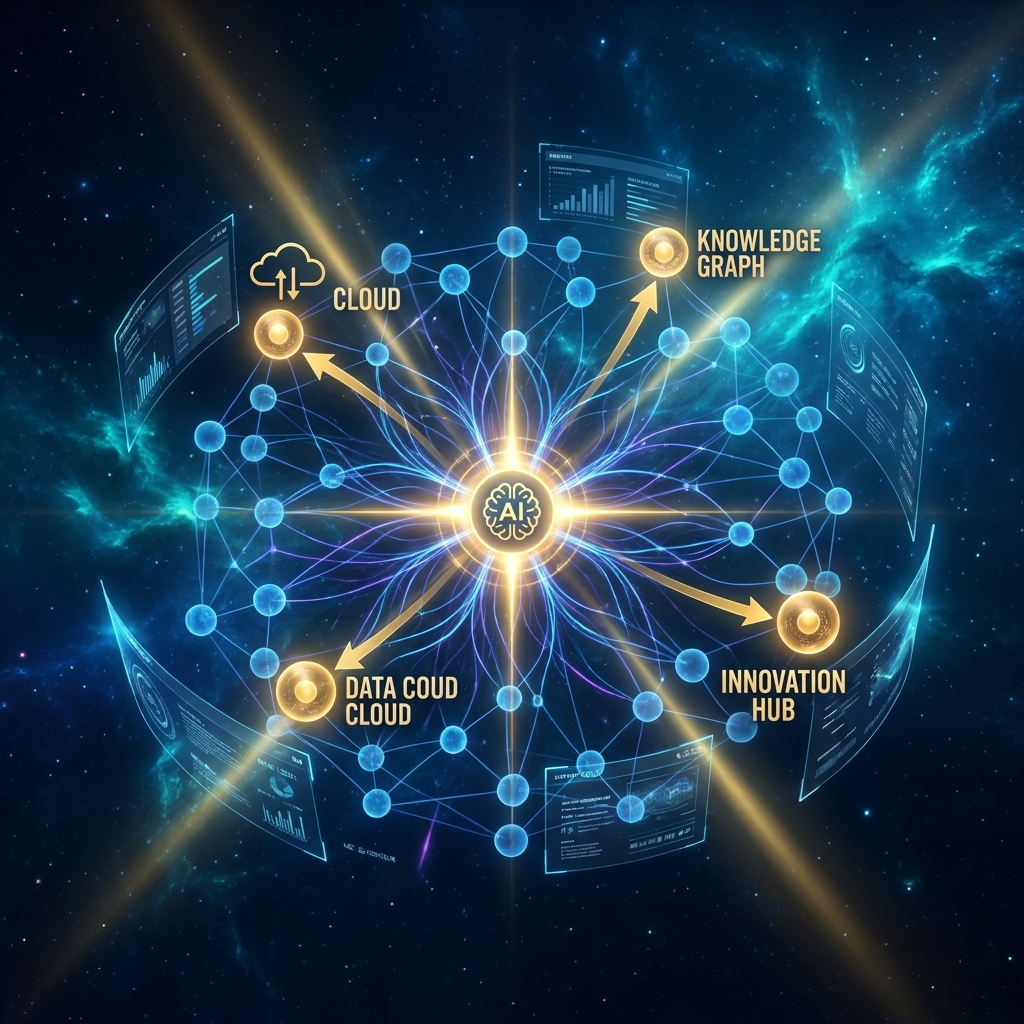
The strategic alternative to isolated page optimization is content ecosystem architecture: a systematically interconnected web of content that signals topical authority to AI systems across multiple surfaces and contexts.
This architecture has four interlocking layers: topical depth (owned content), structural signals (technical and on-page), off-site authority (third-party citations and earned presence), and measurement infrastructure (AI citation tracking).
It is not a one-time build. It is a continuously expanding foundation. AI systems update their understanding of brand authority as new content is published and new citations are earned.
Layer 1: Topical Depth — Building the Owned Content Foundation
Topical depth means systematically covering every dimension of a subject area, not just high-volume keywords, so AI systems recognize the brand as a comprehensive, authoritative source.
The proven structure is pillar-cluster architecture: a central pillar page establishing topical authority, supported by a cluster of interlinked content pieces addressing specific subtopics, questions, comparisons, and use cases.
Internal linking density matters more than most teams realize. AI crawlers and language models follow the same interconnected content signals that Google’s crawlers do. A well-linked content ecosystem reinforces topical authority signals across the entire site.
Content freshness is equally important. Since E-E-A-T is an AI inclusion criterion, outdated content increases hallucination risk and competitor substitution. A content ecosystem must include a systematic refresh cadence, not just net-new production.
Each piece should also deliver genuine information gain: a unique perspective, proprietary data point, or original insight that AI models cannot source from consensus content. That is what earns citation over competitors. The structural evidence supports this. Content with 5 to 7 statistics earns 20 percent higher citation likelihood in ChatGPT, structured content with comparison tables earns 25.7 percent more citations, and validation pages with 8 list sections earn up to 26.9 percent more citations.
Layer 2: Structural Signals — Making Content AI-Readable at Scale
Structural signals are the technical layer that makes content legible to AI systems. They do not replace topical depth. They amplify it.
The core structural elements include clear heading hierarchies, answer-first content blocks (direct answers to questions within the first 100 words of a section), structured data and schema markup, FAQ sections, and comparison tables.
Crawlability for AI agents deserves specific attention. GPTBot, PerplexityBot, and other AI crawlers behave differently from traditional search crawlers. They synthesize and recommend rather than simply index, which means content must be structured for synthesis, not merely for indexing.
The metadata layer still matters. Title tags, meta descriptions, and structured data must accurately represent the content’s topical scope, because AI systems use these signals to assess relevance before synthesizing.
There is a multimodal dimension as well. One in six AI Mode searches in the US already uses voice or images. Content ecosystems should include optimized image alt text, video transcripts, and voice-friendly answer structures to capture these emerging surfaces.
The caveat is worth repeating: structural optimization without topical depth is insufficient. A perfectly structured page on a topic where the brand has no surrounding ecosystem will rarely earn consistent citation.
Layer 3: Off-Site Authority — The Third-Party Citation Network
Here is the insight most brands miss entirely. Language models weight brands that appear consistently in authoritative third-party contexts: industry publications, community forums, expert directories, earned media, and review platforms. Off-site authority is now as critical as on-site optimization.
The training data dynamic explains why. AI systems like ChatGPT and Perplexity draw citations heavily from third-party sites, especially as purchase intent strengthens. Thought leadership and original research published in external venues is essential for AI visibility.
The primary off-site citation surfaces include industry publications and trade media, LinkedIn (particularly long-form articles and expert commentary), Reddit and community forums, YouTube (transcripts are indexed and cited), review platforms, and expert directories.
This reframes digital PR entirely. Earning mentions in authoritative publications is no longer just a brand awareness play. It is a direct mechanism for increasing AI citation frequency, because AI systems treat third-party mentions as trust signals.
Original research, proprietary data, and expert perspectives published externally create the kind of unique, citable content that AI systems cannot source from consensus material and that competitors cannot easily replicate. Because a single inaccurate citation can spread across multiple generative systems, proactive management of off-site brand presence has become a core reputation function.
Layer 4: Measurement Infrastructure — Tracking What Actually Matters in the Citation Economy
The citation economy demands a shift from tracking keyword rankings and organic sessions to monitoring AI citations, share of voice in AI responses, and brand mentions across LLM platforms.
The new measurement primitives are: AI citation frequency (how often the brand appears in AI-generated responses), citation context (whether the brand is cited favorably, neutrally, or inaccurately), share of voice in AI answers for target topics, and AI-referred traffic quality.
That last metric matters more than it sounds. AI-sourced traffic converts at 4 to 5 times the rate of traditional organic traffic, making AI citation a revenue-quality metric worth tracking separately.
There is an attribution challenge to solve. Because AI Mode and many chatbot interactions produce zero clicks, traditional analytics undercount AI-driven brand exposure. Brands need to supplement click-based measurement with AI mention monitoring tools.
Measurement should feed back into content decisions, identifying topics where citation is weak, gaps competitors are filling, and off-site authority opportunities being missed. This reflects the consensus of the field: 76 percent of SEO practitioners describe 2026 SEO as visibility depending less on ranking position and more on presence across AI search and intent-driven surfaces.
The Execution Gap: Why 94% of Enterprises Know This and Still Can’t Do It
The strategy is well understood. The execution is where brands break down.
In 2025, US enterprises dedicated 12 percent of their digital marketing budgets to GEO on average, and 94 percent planned to spend more in 2026. Yet creating AI-optimized content at scale remains the number one execution challenge.
The root causes are structural. Content ecosystem architecture requires volume (12 or more pieces per month for meaningful gains), consistency (a sustained cadence, not campaign bursts), interconnection (internal linking and topical clustering at scale), and continuous refresh (not just net-new production).
Traditional resourcing models cannot meet these demands. Agencies typically charge 8,000 to 15,000 dollars per month for 8 to 12 articles, a volume insufficient to build ecosystem density and a cost most growth-stage businesses cannot sustain. For many businesses, an SEO agency alternative built around automation offers a more viable path.
Generic AI writing tools fail for a different reason. They can produce individual pieces but lack persistent brand context, integrated SEO/GEO optimization, automated publishing, and the systematic interconnection that transforms isolated pages into a citation-ready ecosystem.
The volume-velocity requirement is not negotiable. Brands producing 12 or more pieces per month achieve up to 200x faster AI visibility gains than those producing four. This is a structural requirement, not a preference.
The gap is most acute for growth-stage businesses with lean marketing teams, typically 1 to 5 marketers, that have revenue traction but cannot afford full agency retainers. These are precisely the businesses for whom AI citation represents the greatest competitive opportunity. Closing the gap requires not more manual effort but a fundamentally different operational model, one that systematizes ecosystem architecture rather than treating each piece as a discrete project.
Closing the Execution Gap: Systematizing the Citation Economy Playbook
The execution gap is not a strategy problem. Most marketing leaders already understand the framework. It is an operational problem of producing AI-citation-ready content at the volume, velocity, and interconnection the citation economy demands.
The structural solution is an agentic AI operations model: platforms that operate continuously in the background, researching topics, identifying content gaps, producing structured content, building internal links, and publishing automatically, rather than requiring manual prompting at each step.
The operational requirements are clear: business and competitor analysis to identify topical authority gaps, systematic topic discovery and content gap identification, structured content creation aligned to AI citation signals, page organization and internal linking at scale, automated publishing to CMS, and continuous performance tracking and refresh.
At scale, this also requires persistent brand context, including tone, voice, guidelines, and positioning, maintained across every piece without manual re-briefing. That is a capability gap in generic AI tools.
This is where KOZEC fits. It is an AI-powered SEO content automation platform that handles the complete content production and publishing workflow using agentic AI, delivering 15 to 60 or more content pieces per month at 600 to 1,500 dollars per month. That volume meets the threshold for meaningful AI citation gains at a fraction of agency cost.
KOZEC’s architecture is GEO-specific. The platform structures content for visibility in AI-generated search results, including Google AI Overviews and chat assistants, not just traditional rankings, addressing both the SEO and GEO dimensions of the citation economy simultaneously. Early users have reported +386 percent AI Overview Citation Growth and +621 percent Keyword Visibility Increase, with measurable organic traffic growth within 60 to 90 days.
The platform’s SCO (Search Compliance Optimization) framework focuses on Google-recommended practices: useful content, clear pages, smart internal links, and consistent publishing, rather than algorithmic shortcuts. That alignment with genuine trust and credibility signals is exactly what AI systems reward.
The Citation Economy Playbook: A Practical Implementation Roadmap
Below is the actionable synthesis of the framework, a phased roadmap to move from isolated page optimization to content ecosystem architecture. This is not a one-time project. GEO demands the same ongoing discipline as SEO: a sustained program of refreshed content, original research, and expert commentary.
Phase 1: Audit and Architecture (Weeks 1–4)
- Conduct a topical authority audit. Identify the core topic clusters where the brand needs AI citation presence, map existing content against them, and identify gaps, both missing topics and underdeveloped pages.
- Assess off-site authority. Audit current third-party mentions, publication presence, forum participation, and review platform standing to establish a baseline citation profile.
- Define the ecosystem architecture. Establish the pillar-cluster structure for each core topic, define the internal linking framework, and set the cadence needed to hit 12 or more pieces per month.
- Establish measurement baselines. Set up AI citation monitoring, track current share of voice for target topics, and benchmark AI-referred traffic quality.
- Identify the execution model. Determine whether existing resources can achieve the required volume and velocity, or whether an agentic AI platform is needed to close the gap.
Phase 2: Foundation Build (Months 1–3)
- Launch the pillar layer. Produce comprehensive pillar pages for each cluster, structured with clear heading hierarchies, answer-first blocks, comparison tables, and schema markup.
- Begin cluster production at scale. Publish supporting content at 12 or more pieces per month, each contributing unique information gain, not just keyword coverage.
- Build the internal linking architecture. Systematically interlink cluster content to pillar pages and to each other, creating the topical authority signals AI systems recognize.
- Launch the off-site program. Pitch original research to industry publications, activate a LinkedIn content strategy, and engage relevant forums and directories.
- Expect early gains within 60 to 90 days. Visibility improvements in AI platforms typically begin appearing in that window with consistent publishing, faster than traditional SEO timelines when volume and structure are right.
Phase 3: Expansion and Optimization (Months 3–12)
- Use measurement data to identify citation gaps. Determine which topics generate citations, which do not, and what content or authority investments close the gaps.
- Expand topical coverage. Deepen authority in high-citation-potential areas and begin building ecosystems in adjacent topics.
- Implement a refresh program. Update existing content, add new statistics, and expand the sections AI systems draw from most.
- Scale off-site authority. Build on early publication relationships, expand to new platforms and communities, and commission original research that produces citable data points.
- Optimize for emerging surfaces. As AI Mode, voice, and multimodal queries grow, adapt content with video transcripts, voice-friendly answer blocks, and image optimization.
- Track the compounding effect. Each new piece strengthens existing pieces, and each new off-site citation increases the brand’s weight in AI training and retrieval systems.
Conclusion: The Citation Economy Is Not a Future Trend — It Is the Present Competitive Reality
The shift from ranked links to synthesized citations is not a prediction. It is the current operating environment. Google AI Overviews appear on nearly half of all queries. AI Mode produces a 93 percent zero-click rate. Thirty-five percent of users already prefer AI over search engines for brand discovery.
The strategic imperative follows directly. Brands that keep optimizing isolated pages for keyword rankings while competitors build interconnected content ecosystems will grow increasingly invisible in the AI-mediated discovery layer where purchase decisions are now shaped.
The framework itself is not technically complex. The challenge is operational: producing the volume, velocity, and interconnection of AI-citation-ready content that topical authority requires, consistently, without a bloated team. Understanding how to build a content engine that sustains this output is the defining operational challenge of the citation economy era.
That is why the execution gap is not a barrier. It is a competitive advantage for the brands that solve it first. The distance between brands that invest in content ecosystem architecture now and those that wait will only widen as AI search adoption accelerates. US AI search ad spending is projected to grow from 2.08 billion dollars in 2026 to 25.93 billion dollars by 2029. The brands that have already established citation authority will be positioned to capture disproportionate value as that investment scales.
The playbook is available. The only remaining question is whether the operational infrastructure to execute it is in place.
Ready to Build Your Citation Economy Content Ecosystem?
KOZEC is the operational solution to the execution gap described throughout this playbook: an AI-powered content automation platform purpose-built for the citation economy, delivering 15 to 60 or more AI-citation-ready content pieces per month at 600 to 1,500 dollars per month.
The differentiators that matter most for the citation economy are built in: agentic AI that operates continuously without manual prompting, end-to-end automation from topic discovery through publishing, GEO-specific content architecture for Google AI Overviews and chat assistants, and persistent brand context maintained across every piece.
Speed to value is a core advantage. Setup takes days, not months, and early users see measurable organic traffic and AI citation growth within 60 to 90 days.
Schedule a demo at kozec.ai/schedule-a-demo/ to see how KOZEC builds the content ecosystem architecture required to compete in the citation economy. Not ready for a demo yet? Explore the pricing tiers at kozec.ai to understand the volume and velocity options available at each investment level.
In the citation economy, the brands that win are not the ones with the best individual pages. They are the ones with the most authoritative, interconnected, and consistently published content ecosystems. KOZEC exists to make that achievable for growth-stage businesses without enterprise-level teams or budgets.
Stay In The Loop
Subscribe to our free newsletter.
Stop Managing SEO - Start Scaling It
Let KOZEC handle strategy, content, and execution - so you can focus on growth.
Automated SEO content for growing agencies.
KOZEC helps agencies, consultants, and growing brands publish high-quality SEO content on autopilot — so your site ranks higher and converts more visitors.
Managing SEO content for many client websites doesn’t scale with traditional methods. Writers are expensive and inconsistent, keyword research is time-consuming, and publishing requires multiple manual steps. As agencies grow, maintaining both quality and consistency becomes increasingly difficult. KOZEC (Keyword Optimized Zero Effort Content) solves this by automating analysis, keyword discovery, content creation, and publishing—so your clients get reliable SEO content while your team focuses on growth.
Increase organic traffic without manual content creation
Publish keyword-optimized posts automatically to WordPress
Turn SEO into a predictable, scalable growth channel