
AI Content Platform With Multilingual Support: The Global Publishing Readiness Framework for 2026
AI Content Platform With Multilingual Support: The Global Publishing Readiness Framework for 2026
June 3, 2026
AI Content Platform With Multilingual Support: The Global Publishing Readiness Framework for 2026
Introduction: The Translation Trap That’s Costing Global Brands Revenue
Eighty percent of the world does not speak English. Yet most AI content platforms operate as if English is the only language that matters, treating multilingual publishing as a post-creation checkbox rather than a foundational architecture decision.
The business case for multilingual content is unambiguous: 76% of online buyers prefer purchasing from companies that provide information in their native language, and 40% will never buy from websites in other languages. This is not a localization nicety. It is a direct revenue issue that compounds with every market a brand fails to serve in the customer’s preferred language.
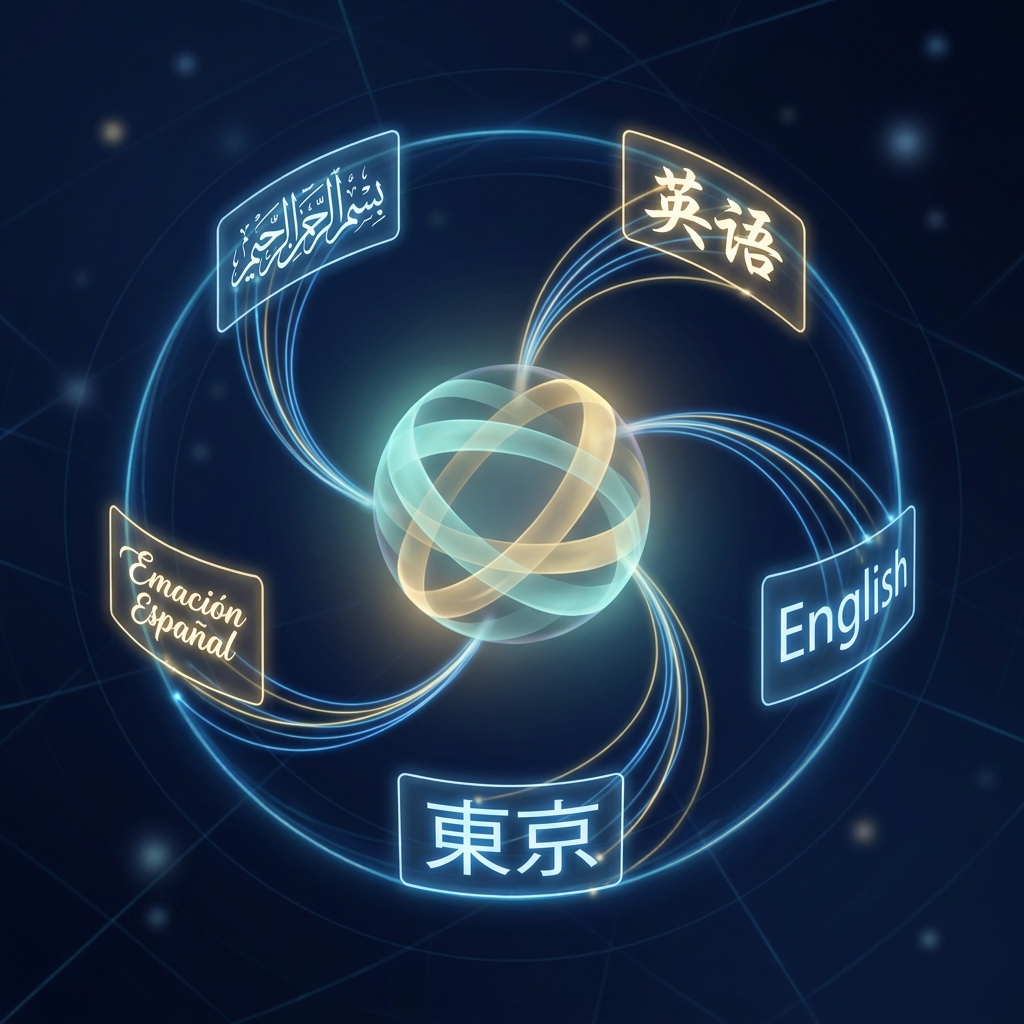
The central tension facing global brands in 2026 is the difference between platforms that “support” multilingual content and platforms that are multilingual-native. The former can translate. The latter research, create, optimize, and publish across languages as a single unified workflow. This distinction determines whether a platform enables global revenue at scale or creates new bottlenecks that fragment content operations.
This article introduces the Global Publishing Readiness Framework, a structured test that exposes which category any AI content platform actually falls into. The framework evaluates platforms across five critical dimensions, revealing whether multilingual capability is a genuine architectural strength or merely a marketing claim.
The thesis is clear: multilingual capability is not a feature toggle. It is a foundational architecture decision that determines whether a platform can serve global revenue at scale in 2026.
KOZEC represents the multilingual-native approach. Its multilingual publishing capability functions as core infrastructure that eliminates the fragmented English-first-then-translate model, enabling brands to research, create, optimize, and publish across languages as a single unified workflow.
The Global Multilingual Imperative: Why 2026 Is the Inflection Point
The market scale demands attention. The AI content generation market is valued at $7.09 billion in 2026, growing at a 47.3% CAGR. Multilingual content generation is cited as one of the key opportunity segments shaping enterprise deployment strategies, according to The Business Research Company.
The language reality of the web reinforces this urgency. In January 2026, English represented only 49.6% of website content. The majority of the web is already non-English, yet most content strategies remain stubbornly English-first.
Adoption data reveals a dangerous gap. Eighty-five percent of marketers now use AI for content creation in 2026, up from 61% in 2023. However, only 44% anticipate AI enabling multilingual content marketing opportunities. This disparity signals that most organizations have not yet connected their AI content investments to their global revenue potential.
Enterprise priorities are shifting rapidly. According to Gartner’s 2026 Customer Service Report, 92% of global enterprises prioritize AI-driven platforms that eliminate language barriers. This figure represents a 37% increase from 2024, signaling enterprise-level urgency that will reshape vendor selection criteria.
Forward-looking enterprises are adopting “Language Operations” (LangOps), a unified strategy treating every language as an equal asset rather than a translation afterthought. This operational philosophy recognizes that linguistic capability is a competitive advantage, not an administrative burden.
UNESCO’s Global Roadmap on Multilingualism in the Digital Era notes that only 1,000 of the world’s 7,000 languages are currently online. Linguistic inclusion in AI is now framed as a matter of human rights and social justice, elevating the conversation beyond quarterly targets.
The AI translation market growth confirms sustained investment in multilingual infrastructure: from $2.94 billion in 2025 to a projected $8.93 billion by 2030. The infrastructure layer is being built. The question is whether brands will be ready to leverage it.
The English-First Architecture Problem: Why ‘We Support Translation’ Is Not Enough
Most AI content platforms were built with English as the default language layer, with translation bolted on as a secondary feature. This architectural decision creates structural inefficiencies that compound at scale.
The linear workflow failure is predictable. The “create in English, then translate” model introduces compounding errors at every step: brand voice degradation, cultural misalignment, SEO signal loss, and CMS integration friction. Each translation layer adds noise to the signal.
The integration gap is the most commonly cited barrier to scaling AI in multilingual content workflows. According to MultiLingual Magazine’s May 2026 analysis, AI tools that operate outside existing multilingual content ecosystems create friction rather than efficiency.
The AI safety dimension adds another layer of concern. A 2026 benchmark found that AI safeguards effective in English degraded sharply in other languages, with refusal rates dropping by more than half. This finding makes English-first AI systems a systemic multilingual risk, not just a quality issue.
The GEO consequence is particularly damaging. When brands fail to publish authoritative local content, AI systems like Google’s AI Overview actively translate competitors’ English content to fill the gap. English-only brands lose control of their narrative in non-English markets by default.
A multilingual-native architecture operates differently. A platform built with multilingual capability at its core generates, researches, optimizes, and publishes across languages as a single unified workflow. The integration gap disappears because there is no gap to bridge.
The low-resource language opportunity remains largely untapped. Most platforms ignore languages like Swahili, Vietnamese, and regional dialects. Coverage for low-resource languages is expected to increase 50% by end of 2026, representing a significant first-mover opportunity for brands willing to invest in emerging markets.
The Global Publishing Readiness Framework: A Structured Test for AI Content Platforms
The Global Publishing Readiness Framework is a structured evaluation methodology. It is not a feature checklist but a test of architectural depth that separates multilingual-capable platforms from multilingual-native platforms.
The framework serves a practical purpose: to give global content teams, digital agencies, and enterprise marketers a repeatable way to evaluate whether a platform can genuinely serve multilingual publishing at scale.
The framework tests five readiness dimensions:
- Research and Discovery
- Content Generation
- SEO and GEO Optimization
- Publishing Infrastructure
- Governance and Compliance
Each dimension is evaluated on a three-tier scale: Translation-Only (lowest), Multilingual-Capable (middle), and Multilingual-Native (highest). Clear criteria distinguish each tier.
The key insight the framework reveals is consistent: most platforms score at the Translation-Only or Multilingual-Capable tier on at least three of five dimensions. They cannot support global publishing at scale without significant external tooling.
Dimension 1: Research and Discovery
Multilingual-native research means the platform conducts keyword research, competitive analysis, and content gap identification directly in target languages. It does not translate English research outputs.
This matters because search intent, keyword volume, and competitive landscapes differ significantly by language and market. A platform that researches in English and translates the findings produces content optimized for the wrong market signals.
Translation-Only tier: The platform identifies topics in English and relies on the user to adapt research for other markets.
Multilingual-Capable tier: The platform can surface some non-English keyword data but relies on English-first logic to structure content strategy.
Multilingual-Native tier: The platform conducts autonomous research in target languages, identifies market-specific content gaps, and builds content strategies rooted in local search behavior.
KOZEC’s agentic AI performs business and competitor analysis as part of its core workflow, with multi-language SEO content automation built into the platform’s foundational architecture rather than as a post-research translation step.
Dimension 2: Content Generation
Creating content natively in a target language is architecturally different from translating English content. Even high-quality AI translation cannot replicate the cultural appropriateness of native-language generation.
Platforms that translate after creation cannot maintain consistent brand voice across languages because the voice was established in English and then approximated in translation.
Automated language translation improved multilingual communication efficiency by 44% in 2025. However, efficiency gains do not equal cultural accuracy, a distinction that matters for brand credibility in non-English markets.
Multilingual-Native content generation means the platform generates content with persistent brand context maintained across all languages, not rebuilt from scratch for each language or approximated through translation.
KOZEC maintains brand voice and guidelines across all content without starting from scratch each session. This capability extends to multilingual publishing as a core infrastructure advantage. Understanding how AI writes SEO-optimized blog posts reveals why native-language generation produces fundamentally different results than post-creation translation.
Dimension 3: SEO and GEO Optimization
The SEO stakes are substantial. Adding multilingual content boosts AI search visibility by up to 327%. Translated sites received 24% more citations per query in Google’s AI Overview, making multilingual publishing a direct SEO and GEO competitive advantage.
As AI-powered search becomes the primary discovery channel, platforms that publish authoritative multilingual content gain citation advantages that English-only platforms cannot replicate.
The common failure mode: platforms that treat multilingual as a translation layer often publish non-English pages without proper metadata, structured data, hreflang tags, or internal linking. They create SEO-invisible content that wastes publishing effort.
Multilingual-Native SEO tier: The platform applies full SEO and GEO optimization to every language as part of the core publishing workflow.
KOZEC’s Search Compliance Optimization and Generative Engine Optimization capabilities are applied as part of the core workflow. Non-English pages are structured for both traditional rankings and AI-powered discovery.
Dimension 4: Publishing Infrastructure
The publishing infrastructure test is the most operationally revealing dimension. A platform may generate multilingual content well but fail at the publishing layer, requiring manual uploads, separate CMS configurations, or third-party localization tools.
Most competitors require separate tools for translation management, CMS integration, and quality review. This creates the exact fragmentation that multilingual-native platforms are designed to eliminate.
Multilingual-Native publishing infrastructure means automated publishing directly to CMS in target languages, with proper page organization, automated internal linking across language versions, and image sourcing. No manual uploads. No workflow interruptions.
Enterprise global brands manage multiple language-specific properties. Platforms that cannot handle multi-site publishing natively create operational bottlenecks that scale linearly with the number of markets served.
KOZEC publishes directly to WordPress and major CMS platforms, supports multi-site management, and includes API publishing for enterprise clients. Multilingual publishing is part of the core automated workflow.
Dimension 5: Governance and Compliance
The regulatory dimension is the most underestimated readiness factor. Most platform evaluations focus on features and output quality, ignoring the compliance infrastructure required to publish AI-generated multilingual content in regulated markets.
The EU AI Act, fully effective from 2026, classifies many AI translation applications in high-risk categories for legal, regulatory, or safety-critical content. Fines reach up to €35 million or 7% of global annual turnover for non-compliance.
The 2026 New Delhi Frontier Model Voluntary Commitments introduced the first-ever nonbinding requirement that AI model providers conduct multilingual evaluations. This signals the direction of future mandatory regulation.
No major AI content platform currently addresses EU AI Act compliance for multilingual content in regulated industries. This gap represents a significant differentiator for platforms with built-in governance and review workflows.
KOZEC’s human approval workflow allows businesses to review content before publishing. This governance capability is particularly critical for regulated industries publishing multilingual content across multiple markets.
How Most Platforms Score on the Global Publishing Readiness Framework
A comparative analysis reveals consistent patterns across leading platforms. Most AI content platforms were built with English as the default language layer, with multilingual support added as a secondary capability. The result is a predictable scoring pattern across the five framework dimensions.
Platforms that position multilingual as a premium add-on rather than a native workflow consistently score Translation-Only on Research and Discovery and Publishing Infrastructure, regardless of how many languages their content generation layer supports. Language count is not the same as multilingual-native architecture.
Platforms built primarily as translation and localization tools score higher on Content Generation and Publishing Infrastructure but weaker on Research and Discovery, SEO and GEO Optimization, and Governance and Compliance. They are strong on individual dimensions but do not offer a unified end-to-end workflow.
The common pattern is clear: most platforms score Translation-Only or Multilingual-Capable on at least three of five dimensions. They cannot support global publishing at scale without significant external tooling, manual intervention, or workflow fragmentation.
KOZEC is designed as a multilingual-native platform across all five dimensions. Research, generation, optimization, publishing, and governance operate as a single unified workflow rather than a collection of multilingual features layered onto an English-first architecture.
KOZEC’s Multilingual Architecture: What Multilingual-Native Looks Like in Practice
KOZEC’s multilingual publishing capability is core infrastructure, not a bonus feature. The platform was built to eliminate the fragmented English-first-then-translate model from the ground up.
The end-to-end multilingual workflow proceeds through business and competitor analysis, topic discovery and content gap identification, structured content creation, page organization and internal linking, automated publishing, and performance tracking. All steps execute across languages as a single unified process.
The persistent brand context advantage is significant. KOZEC maintains brand voice and guidelines across all content and all languages without starting from scratch. This eliminates the brand voice degradation that plagues translation-layer approaches.
The SCO and GEO advantage extends to multilingual markets. KOZEC’s Search Compliance Optimization and Generative Engine Optimization frameworks are applied to every language, ensuring non-English pages are structured for both traditional search rankings and AI-powered discovery citations.
The operational efficiency argument is compelling. KOZEC delivers 15 to 60+ content pieces per month at $600 to $1,500 per month. Traditional agencies charge $8,000 to $15,000 per month for 8 to 12 articles. Multilingual publishing is included as part of the core workflow, not priced as a separate tier. For a detailed breakdown of what this means for budget planning, the SEO content platform pricing for 2026 page provides current plan comparisons.
Early users report measurable organic traffic growth within 60 to 90 days. This timeline applies to multilingual markets as well, given the platform’s native multilingual architecture.
Platforms that publish authoritative multilingual content gain up to 327% more AI search visibility. KOZEC’s multilingual publishing capability directly translates to GEO competitive advantage in non-English markets.
The Business Case for Multilingual-Native Publishing: Revenue, Retention, and Reach
The revenue case is direct: 76% of online buyers prefer purchasing in their native language, and 40% will never buy from websites in other languages. Multilingual publishing is a revenue enabler, not a cost center.
The retention advantage compounds over time. Companies with multilingual support see 73% higher customer retention rates. This metric directly impacts customer lifetime value.
Support cost reduction resonates with financial leadership. AI-powered multilingual content can reduce support costs by 50 to 70% by enabling customers to self-serve in their native language.
The GEO citation multiplier makes multilingual publishing a compounding investment. Translated sites received 24% more citations per query in Google’s AI Overview.
The emerging market opportunity is substantial. Coverage for low-resource languages is expected to increase 50% by end of 2026, particularly in Africa, Southeast Asia, and South America. First-mover multilingual content advantage is still achievable in these markets.
The generative AI content creation market projection confirms the trajectory: growth from $24.08 billion in 2026 to $143.09 billion by 2035. Multilingual content generation is one of the primary growth drivers.
The synthesis is clear: multilingual-native publishing is not an expense. It is a revenue architecture decision that determines whether a brand can capture global demand, retain international customers, and compete in AI-powered search across every market it serves. Brands that understand how to increase website traffic with content recognize that multilingual publishing multiplies the reach of every content investment made.
Applying the Global Publishing Readiness Framework: Questions to Ask Before Choosing a Platform
Content teams, digital agencies, and enterprise marketers can use these evaluation questions when assessing any AI content platform.
Research and Discovery questions:
- Does the platform conduct keyword research and competitive analysis in target languages natively?
- Can it identify content gaps specific to non-English markets?
Content Generation questions:
- Does the platform generate content natively in target languages?
- How does it maintain brand voice consistency across languages without manual reconfiguration?
SEO and GEO Optimization questions:
- Does the platform apply full metadata, structured data, hreflang, and internal linking to non-English pages as part of the core workflow?
- Is GEO optimization applied to multilingual content?
Publishing Infrastructure questions:
- Can the platform publish directly to the CMS in multiple languages without manual uploads?
- Does it support multi-site management for language-specific properties?
Governance and Compliance questions:
- Does the platform include a review and approval workflow for multilingual content?
- What safeguards prevent quality degradation in non-English languages?
The decisive question: Is multilingual publishing a feature the platform supports, or is it the architecture the platform is built on? The answer determines whether the platform will scale with global revenue or become a bottleneck. Teams evaluating options should also consider how to choose an SEO content platform using a structured framework that goes beyond feature comparisons.
Conclusion: Multilingual Publishing Is Not a Feature. It Is the Foundation.
Multilingual capability is not a feature toggle. It is a foundational architecture decision that determines whether an AI content platform can serve global revenue at scale.
The Global Publishing Readiness Framework reveals a consistent insight: most platforms score at the Translation-Only or Multilingual-Capable tier on at least three of five dimensions. They cannot support global publishing at scale without significant external tooling, regardless of how many languages they claim to support.
The market reality is unambiguous. Eighty percent of the world does not speak English. In January 2026, English represented only 49.6% of website content. Brands that treat multilingual publishing as an afterthought are not just leaving revenue on the table. They are actively ceding their narrative in non-English markets to competitors and AI systems that will fill the content gap.
2026 is the year when the gap between multilingual-capable and multilingual-native platforms becomes commercially decisive. AI-powered search, GEO citation advantages, and emerging market growth converge to reward platforms built on multilingual infrastructure.
KOZEC’s multilingual publishing capability is not a bonus feature. It is core infrastructure that eliminates the fragmented, English-first-then-translate model and enables global brands to research, create, optimize, and publish across languages as a single unified workflow.
The brands that will dominate global organic search and AI-powered discovery in the next three years are not the ones that translate the most content. They are the ones that build on multilingual-native infrastructure from the start.
Ready to Build a Multilingual-Native Content Engine?
Schedule a demo at kozec.ai/schedule-a-demo to see KOZEC’s multilingual publishing workflow in action. Apply the Global Publishing Readiness Framework to specific global content needs and evaluate how any current platform scores across all five dimensions.
KOZEC offers setup in days, not months, with no long-term contracts. This lowers the barrier to switching from a multilingual-capable platform to a multilingual-native one.
Contact options include phone at (888) 545-7090, email via kozec.ai, or demo booking directly through the website.
Every month spent on an English-first-then-translate workflow is a month of compounding GEO citation disadvantage, lost non-English organic traffic, and ceded narrative in global markets. The cost of inaction is measurable and growing.
Stay In The Loop
Subscribe to our free newsletter.
Stop Managing SEO - Start Scaling It
Let KOZEC handle strategy, content, and execution - so you can focus on growth.
Automated SEO content for growing agencies.
KOZEC helps agencies, consultants, and growing brands publish high-quality SEO content on autopilot — so your site ranks higher and converts more visitors.
Managing SEO content for many client websites doesn’t scale with traditional methods. Writers are expensive and inconsistent, keyword research is time-consuming, and publishing requires multiple manual steps. As agencies grow, maintaining both quality and consistency becomes increasingly difficult. KOZEC (Keyword Optimized Zero Effort Content) solves this by automating analysis, keyword discovery, content creation, and publishing—so your clients get reliable SEO content while your team focuses on growth.
Increase organic traffic without manual content creation
Publish keyword-optimized posts automatically to WordPress
Turn SEO into a predictable, scalable growth channel