
Automated Content Marketing for Franchises: How 845,000 Locations Can Win Local SEO Without Sacrificing Brand Control in 2026
Automated Content Marketing for Franchises: How 845,000 Locations Can Win Local SEO Without Sacrificing Brand Control in 2026
April 14, 2026
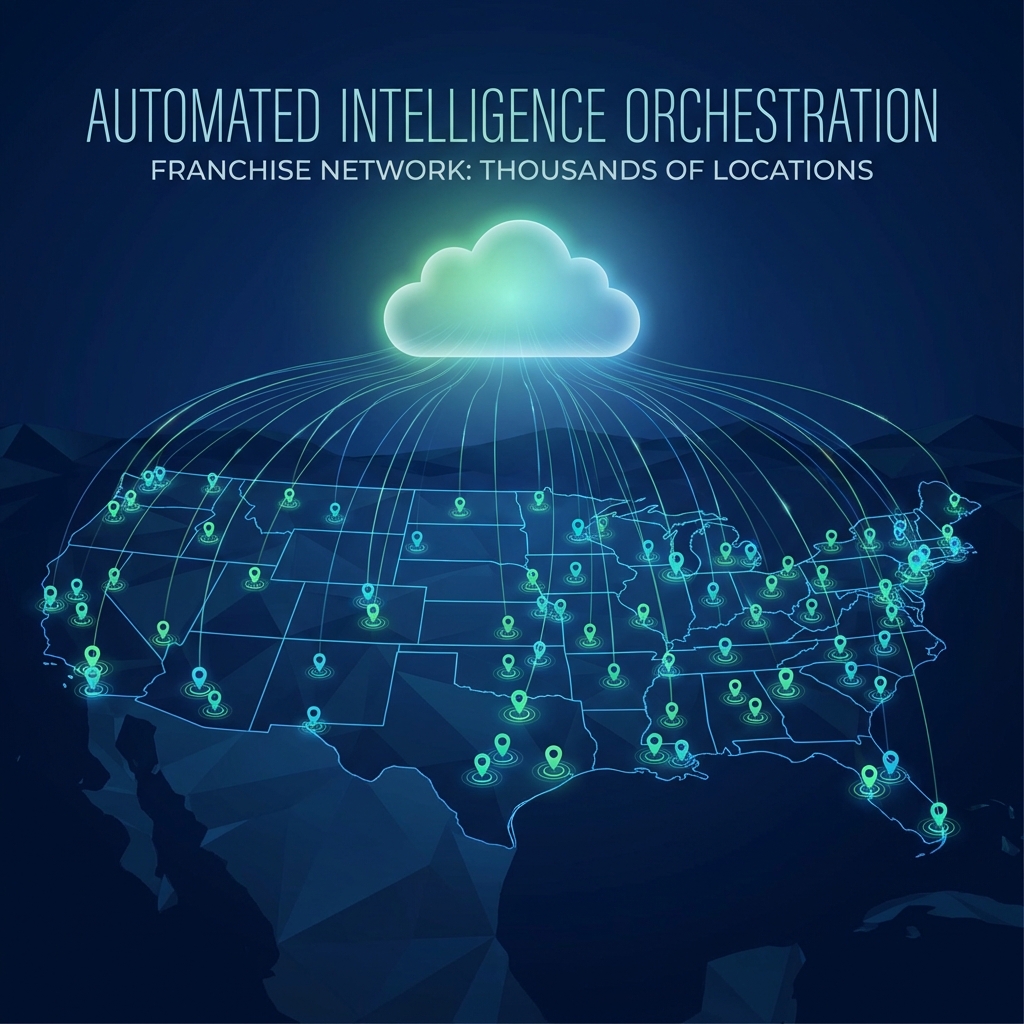
Automated Content Marketing for Franchises: How 845,000 Locations Can Win Local SEO Without Sacrificing Brand Control in 2026
Introduction: The $921 Billion Franchise Marketing Problem No One Is Solving Correctly
The U.S. franchise industry is projected to reach approximately 845,000 establishments in 2026, generating over $921.4 billion in economic output and employing nearly 8.9 million workers. Each of these locations requires a local digital presence that performs—not just exists. Yet the dominant conversation in franchise marketing circles continues to frame brand consistency and local relevance as an either/or tradeoff requiring painful compromise.
This framing is fundamentally wrong.
The tension franchise operators experience is not between control and autonomy. It is between infrastructure and improvisation. Franchise systems that build the right automated content marketing infrastructure can achieve brand consistency and local SEO dominance simultaneously, without sacrificing either.
This article examines how automated content marketing serves as the architectural solution to the franchise marketing challenge. It addresses tiered content governance models, the emerging Generative Engine Optimization (GEO) gap that threatens location visibility, franchisee satisfaction data that reshapes the conversation about control, and the concrete ROI case for local SEO automation. Critically, it explores what most competitor content ignores entirely: agentic AI systems, GEO optimization for individual franchise locations, and the franchisee empowerment dimension that determines whether automation succeeds or fails.
The Scale Problem: Why Manual Content Marketing Fails at 845,000 Locations
The content volume crisis facing franchise systems has reached a breaking point. The average real estate franchise brand managed approximately 10,000 digital assets per year in 2022. By 2025, that number tripled—illustrating the exponential throughput demands that manual workflows simply cannot address.
The multi-unit operator reality intensifies this challenge. As of 2025, 19.3% of franchisees operate multiple units, collectively controlling 58.8% of all franchised locations. These multi-unit operators represent the primary audience for scalable automation because they face the content multiplication problem most acutely.
Without automation, the pattern is predictable and destructive. Franchisees hire random local agencies or attempt DIY marketing, producing inconsistent quality, wasted spend, and brand dilution. Beyond quality concerns, franchisees who create their own marketing materials risk unapproved claims, regulatory violations, and legal exposure—a structural risk that automation eliminates by design.
The reputation stakes compound this urgency. Research indicates that 50% of social media users will boycott a brand after receiving a poor response from any single location—making consistent, automated reputation management across all franchise locations a business-critical function rather than a marketing nice-to-have.
The problem is not effort or intention. It is infrastructure. Without automated systems, even well-resourced franchise systems cannot maintain quality and consistency at this scale. Understanding why most businesses fail at content marketing reveals that the root cause is almost always operational rather than strategic.
Why Local SEO Is the Highest-ROI Channel Franchises Are Underinvesting In
The ROI data reveals a striking misallocation of marketing resources. Local SEO commands only 28% of franchise marketing spend but delivers a 274% ROI. Paid advertising receives 39% of budget but yields only 81% ROI. This gap represents one of the most significant opportunities for franchise systems willing to reallocate resources toward automated local content.
The Google Business Profile opportunity alone justifies this shift. Optimized profiles generate 520% more calls than unmanaged listings—making automated local content and listing management a primary revenue driver for multi-location franchises.
The lead volume impact is equally compelling. Multi-location businesses report 40–80% lead volume increases following local SEO restructuring. Franchise clients specifically report 50–100% increases when implementing automated content frameworks designed for multi-location scale.
Local SEO underinvestment connects directly to the infrastructure gap. Without automation, franchises cannot consistently optimize hundreds or thousands of location pages. The bottleneck is operational, not strategic—marketing teams understand the value but lack the systems to execute.
Consistent brand presentation across all platforms can increase revenues by up to 23%, reinforcing that local SEO and brand standards are financially complementary rather than competing priorities. The ROI case for local SEO is overwhelming. The only question is how to execute it at franchise scale without losing brand control.
The Emerging GEO Gap: Why 800,000+ Franchise Locations Are Invisible to AI
Generative Engine Optimization (GEO) represents the largely unaddressed frontier in franchise marketing. AI chatbots recommend the same top 5–10 mega-brands in more than 90% of queries, leaving the vast majority of franchise locations invisible to this rapidly growing search channel.
The urgency is quantifiable. Gartner forecasts traditional search engine volume will drop 25% by 2026 due to AI chatbots. Users are already nearly 50% less likely to click traditional results when AI-generated overviews are present. Franchise systems that ignore GEO optimization are building marketing strategies for a search landscape that is rapidly disappearing.
GEO requires brand E-E-A-T (Experience, Expertise, Authoritativeness, Trustworthiness) signals across all digital channels, structured data implementation, and consistent, authoritative location-level content. Individual franchise locations cannot build this content authority and structured data infrastructure through manual approaches—the volume and technical requirements exceed what improvised workflows can deliver.
Automated content marketing platforms that continuously publish keyword-optimized, schema-marked, location-specific content provide the mechanism through which individual franchise locations can compete for AI recommendation visibility. The International Franchise Association’s 2026 guidance emphasizes that franchisors must invest in integrated digital presence to ensure accurate AI representation—framing GEO readiness as a franchisor-level infrastructure responsibility, not a franchisee-level task.
Infrastructure vs. Improvisation: Introducing the Tiered Content Governance Model
The tiered content governance model serves as the architectural framework that resolves the brand consistency versus local relevance false dilemma. The core principle is straightforward: not all content decisions carry equal brand risk. A governance model assigns control at the appropriate level based on risk—not based on blanket policies of restriction or permissiveness.
Tier 1: Franchisor-Controlled Brand Foundation Content
Tier 1 encompasses content that establishes non-negotiable brand identity: brand voice guidelines, core value propositions, legal and compliance-sensitive claims, product and service descriptions, and visual brand standards.
Automated content platforms enforce Tier 1 by injecting brand-approved language, approved claims, and compliant messaging into every piece of location-level content. This eliminates the risk of franchisee improvisation in high-stakes areas. The 47% of franchisors who cite managing brand reputation across multiple markets as their biggest marketing hurdle find direct relief through Tier 1 automation.
The technical mechanism involves brand profiles, approved keyword libraries, and content templates configured at the franchisor level and propagated automatically across all connected locations.
Tier 2: System-Wide Content Templates with Local Variables
Tier 2 serves as the engine of scale—brand-approved content frameworks automatically localized with location-specific variables including city names, local landmarks, service area details, local events, and location-specific offers.
This tier makes local relevance achievable at scale without manual effort. Automated systems generate location pages, blog posts, and service content that are genuinely local in context while remaining brand-compliant in structure and messaging. Each of 845,000 locations can have unique, search-optimized content without a human writer producing each piece individually.
The keyword intelligence layer enhances this capability. Automated platforms identify location-specific keyword opportunities—competitor gaps, local search intent, and untapped ranking opportunities—and incorporate them into Tier 2 content automatically. Tier 2 automation represents the only operationally viable response to the exponential digital asset volume growth franchise systems face. Platforms built around competitor keyword gap analysis make this local intelligence scalable across every connected location.
Tier 3: Franchisee-Empowered Local Content Within Guardrails
Tier 3 represents the empowerment layer—approved content categories where franchisees can contribute local voice, community involvement content, local event promotion, and customer stories within automated guardrails that prevent brand violations.
The business case for Tier 3 is compelling: 61% of franchisees with full control over their messaging report being “very satisfied,” compared to only 20% with limited or no control. The goal of automation is not to restrict franchisees but to give them a safe, brand-compliant space to express local identity—which drives both satisfaction and local SEO performance.
Approval workflow mechanisms allow franchisors to review, approve, or modify franchisee-generated content before publication, maintaining oversight without creating bottlenecks. Franchisee autonomy and intra-brand competition are documented structural barriers to omnichannel adoption. Tier 3 resolves this by making local participation easy, safe, and rewarding rather than risky.
How Automated Content Marketing Works at Franchise Scale: The Technical Architecture
Understanding the practical mechanics of automated content platforms clarifies how franchise systems can implement these solutions. The process begins with site analysis—the platform scans each location’s website, builds a business profile specific to that location, audits existing content, and performs technical SEO analysis. This creates a unique content strategy per location rather than a one-size-fits-all approach.
The keyword discovery layer identifies current ranking keywords for each location, analyzes competitor keyword gaps in that specific market, and maps local search intent. This ensures content targets meaningful local opportunities rather than generic terms that fail to drive location-specific traffic.
Content generation incorporates business-context-aware creation for each location, including brand-approved language, local variables, proper header structure, meta titles and descriptions, internal and external links, FAQ sections, calls-to-action, and royalty-free images.
Direct CMS publishing eliminates manual workflows entirely. Content publishes automatically to each location’s website with full SEO metadata, integrating with major SEO plugins. Automated schema markup implementation at the location level serves as a critical GEO enabler, helping individual franchise locations appear in AI-generated responses.
The performance intelligence layer tracks traffic, rankings, and conversions per location, learning over time which content strategies deliver the highest ROI. This creates compounding intelligence across the franchise system—the longer the system operates, the more effective it becomes.
The Agentic AI Shift: From Automated Tools to Autonomous Marketing Systems
The 2026 IFA Convention highlighted agentic AI as the defining technology trend for franchise marketing infrastructure. These systems are capable of real-time, autonomous decision-making—not AI tools that require human prompting, but systems that act independently to optimize marketing performance.
For franchise marketing, agentic AI can monitor search algorithm changes, competitor movements, and local market shifts in real time and adjust content strategy autonomously. This eliminates the delay inherent in waiting for monthly agency reports or human decision-making cycles.
The foundation for this shift already exists. 68% of franchises adopted marketing automation tools in 2024, achieving 43% campaign efficiency improvements across franchise brands. Franchise businesses using AI for marketing already see a 25% increase in lead conversion rates. Agentic AI represents the mechanism that will accelerate these gains.
The distinction matters: previous automation tools executed human-defined tasks. Agentic systems optimize strategy autonomously based on performance data. This represents a qualitative shift in what automation means for franchise marketing. Two-thirds of businesses now use AI in at least one internal process, and the trajectory toward autonomous marketing systems is clear. Understanding how AI is changing SEO in 2026 provides essential context for franchise systems evaluating where to invest their marketing infrastructure budgets.
The Franchisee Empowerment Argument: Why Better Automation Means More Satisfied Operators
The data that competitor content ignores reveals a critical insight: 61% of franchisees with full control over their messaging report being “very satisfied,” compared to only 20% with limited or no control—a 41-percentage-point satisfaction gap driven by autonomy.
The conventional interpretation suggests giving franchisees more freedom. The correct reading is that it argues for giving franchisees better tools that make local marketing feel like empowerment rather than restriction.
The empowerment paradox of effective automation is counterintuitive: a franchisee using an automated content platform that handles keyword research, content creation, and publishing feels more in control of their local marketing than a franchisee left to manage it manually. The platform delivers results they could not achieve independently.
Automated marketing systems also reduce the time and expertise required for new franchisees to launch effective local marketing from day one—lowering the barrier to entry and accelerating time-to-revenue. Satisfied franchisees are more likely to invest in their locations, follow brand standards, and remain in the system. Franchisee empowerment through automation becomes a franchisor retention and growth strategy, not just a marketing tactic.
Measuring What Matters: The ROI Framework for Franchise Content Automation
The measurement framework for content automation investment begins with channel ROI comparison: local SEO at 274% ROI versus paid advertising at 81% ROI. The math argues for shifting budget toward automated local content.
Lead volume serves as the most compelling near-term KPI: 40–80% lead volume increases for multi-location businesses following local SEO restructuring, with franchise-specific results reaching 50–100% increases. The Google Business Profile opportunity provides a measurable quick win—520% more calls from optimized versus unmanaged listings represents a metric every franchisee can track and attribute directly to local content investment.
Unlike paid advertising where results stop when spend stops, automated content marketing builds domain authority and ranking positions that compound over time—creating an asset rather than an expense. A compounding organic traffic strategy is particularly powerful for franchise systems because the authority built across hundreds of location pages reinforces the entire brand’s search presence. Additionally, 52% of franchise brands report AI helps reduce operational costs by automating repetitive tasks, and 45% report increased operational efficiency. Content automation functions as both a revenue driver and a cost reduction strategy.
The core franchise content automation dashboard should track organic traffic per location, local keyword ranking positions, Google Business Profile call volume, lead attribution by location, and content publication consistency.
KOZEC: Automated Content Marketing Infrastructure Built for Multi-Location Scale
KOZEC (Keyword Optimized Zero Effort Content) is a fully automated SEO content platform purpose-built for the scale and governance requirements of franchise systems. The platform operates through a four-step automated process that eliminates manual content workflows: site analysis and business profile building, keyword discovery and competitor gap analysis, business-context-aware content generation, and direct WordPress publishing with full SEO metadata.
Per-location configuration capability distinguishes KOZEC from generic content tools. Each connected location maintains its own business profile, keyword strategy, publishing calendar, and content history—enabling genuine local relevance without manual management per location.
Brand governance features make KOZEC appropriate for franchise deployment: custom tone and voice configuration, approval workflows for content review before publication, and brand-consistent content structure across all locations. GEO-readiness features include schema markup and structured data integration, comprehensive SEO metadata, and strategic internal and external linking—the technical foundation for individual franchise locations to compete for AI recommendation visibility.
The Enterprise plan supports 100+ articles per location on a custom schedule with dedicated account strategist support, custom API integrations, multi-language content strategy, and private-label deployment—designed for franchise systems operating at full scale. Early users report measurable organic traffic growth within 60–90 days, with the platform’s compounding intelligence learning which content strategies deliver the highest ROI over time. Explore the full details of franchise SEO content automation to understand how KOZEC’s architecture maps to the specific governance and scale requirements of multi-location brands.
Conclusion: The Infrastructure Decision That Defines Franchise Marketing in 2026
The question facing franchise systems in 2026 is not whether to prioritize brand consistency or local relevance. It is whether to build the infrastructure that makes both simultaneously achievable—or continue improvising at scale.
The evidence converges: the 845,000-location addressable market, the 274% ROI case for local SEO, the GEO visibility gap growing as AI search expands, the franchisee satisfaction data arguing for empowerment over restriction, and the agentic AI shift redefining what marketing automation means.
The tiered governance model provides the conceptual framework that resolves the false dilemma. Tier 1 protects the brand. Tier 2 scales local relevance. Tier 3 empowers franchisees. All three operate simultaneously through automated infrastructure.
The cost of inaction compounds daily. As AI search continues to grow and traditional search volume declines, franchise locations without automated content marketing infrastructure become progressively less visible—to both human searchers and AI recommendation systems.
Every franchise system will eventually have automated content marketing infrastructure. The only question is whether they build it now, while the competitive advantage remains available, or later, when it becomes table stakes.
Ready to Build Your Franchise Content Marketing Infrastructure?
Franchise operators who recognize the infrastructure gap in their current content marketing approach face a clear next step. KOZEC offers demonstrations showing how the platform handles multi-location content automation, brand governance, and local SEO optimization at franchise scale.
The platform eliminates content workflow complexity rather than adding to it. Demonstrations reveal exactly how automated content moves from keyword discovery to live publication without manual intervention. Whether deploying for the first time or scaling an existing content operation, KOZEC’s tiered plans from Bronze through Enterprise are designed to match current scale and growth trajectory.
Franchise systems that build automated content marketing infrastructure in 2026 will be the brands that dominate local search—and AI search—in the years ahead.
Stay In The Loop
Subscribe to our free newsletter.
Stop Managing SEO - Start Scaling It
Let KOZEC handle strategy, content, and execution - so you can focus on growth.
Automated SEO content for growing agencies.
KOZEC helps agencies, consultants, and growing brands publish high-quality SEO content on autopilot — so your site ranks higher and converts more visitors.
Managing SEO content for many client websites doesn’t scale with traditional methods. Writers are expensive and inconsistent, keyword research is time-consuming, and publishing requires multiple manual steps. As agencies grow, maintaining both quality and consistency becomes increasingly difficult. KOZEC (Keyword Optimized Zero Effort Content) solves this by automating analysis, keyword discovery, content creation, and publishing—so your clients get reliable SEO content while your team focuses on growth.
Increase organic traffic without manual content creation
Publish keyword-optimized posts automatically to WordPress
Turn SEO into a predictable, scalable growth channel