Multilingual SEO Content Automation: The Non-English Market Entry Playbook for 2026
Multilingual SEO Content Automation: The Non-English Market Entry Playbook for 2026
July 5, 2026
Multilingual SEO Content Automation: The Non-English Market Entry Playbook for 2026
Introduction: The $11.2 Billion Opportunity English-Only Businesses Are Ignoring
Most English-only businesses are not making a strategic decision to ignore three-quarters of the internet. They are simply responding to a cost and complexity barrier that, until recently, made international expansion feel impossible. That barrier no longer exists, and the businesses still operating as though it does are leaving enormous revenue on the table.
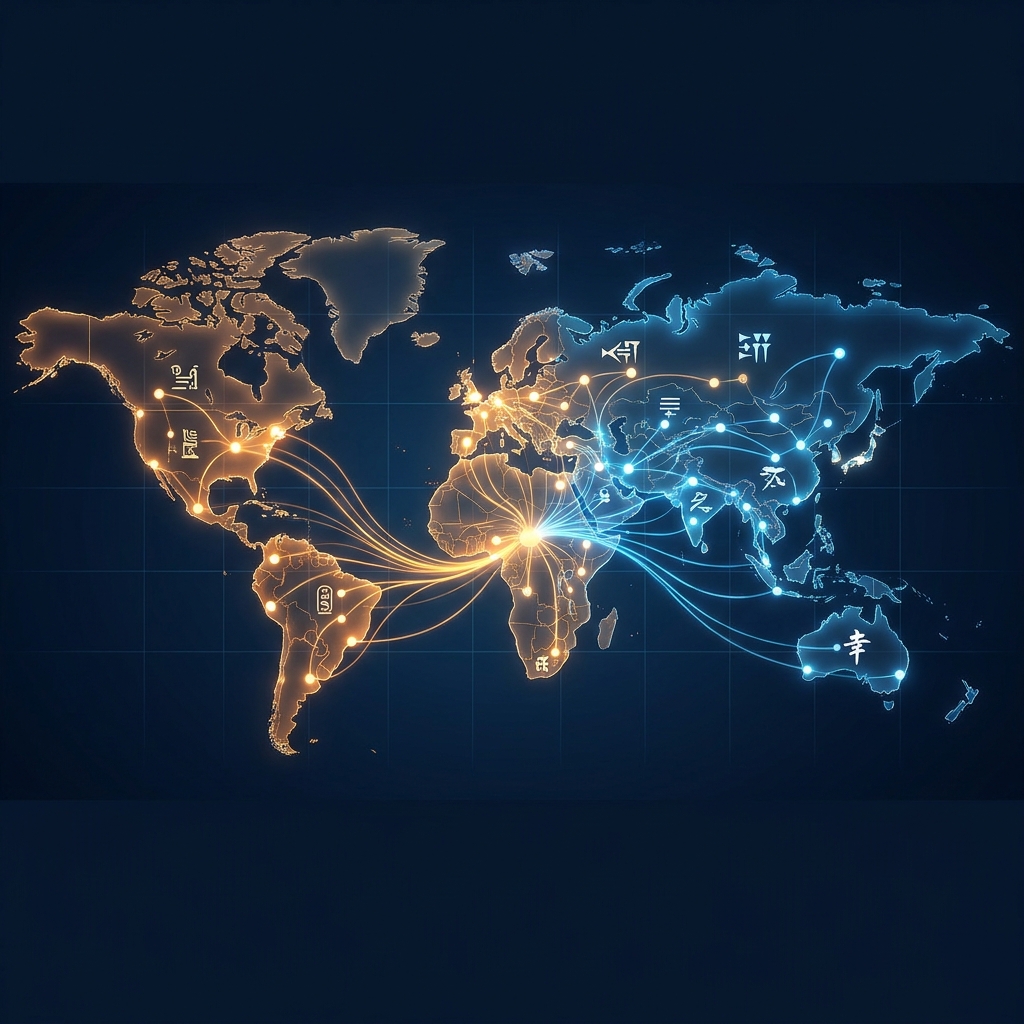
Consider the raw numbers. English accounts for only 25.9% of internet usage worldwide. Chinese (19.4%), Spanish (7.9%), Arabic (5.2%), and Portuguese (4.3%) represent vast, underserved audiences that most Western businesses never attempt to reach. An English-only content strategy structurally excludes nearly 75% of the world’s internet users before a single sales conversation begins.
The consumer behavior data makes the case even starker. Research from CSA Research shows that 76% of consumers prefer to buy products in their native language, and 40% will not purchase from a website that does not appear in their language at all. Multilingual content is not a nice-to-have marketing garnish; it is a direct revenue lever.
Historically, capturing that revenue required deep pockets. Traditional multilingual SEO has cost between $50,000 and $200,000 or more annually, effectively reserving international expansion for enterprise budgets. This article introduces the category that collapses that barrier: multilingual SEO content automation. It presents a market-entry playbook built on revenue math rather than technical jargon, with platforms like KOZEC functioning as a market access multiplier for lean teams.
The Revenue Math: What English-Only Businesses Are Actually Leaving on the Table
The audience gap is measurable with precision. According to Smartling, English accounts for just 49.3% of content across the top 10 million websites globally as of December 2025. Yet businesses continue building English-only content strategies as if the rest of the web did not exist.
Translating that audience gap into a revenue gap is straightforward. If 76% of consumers prefer native-language purchasing and 40% refuse to buy from non-native sites, then an English-only business is structurally blocking the majority of its potential global customers. That is not a marginal loss; it is a systematic ceiling on growth.
Competitors already understand this. The multilingual SEO market reached $11.2 billion in 2025, per Keytomic. The investment is being made. The only real question is whether a given business is capturing its share or watching rivals do so.
The stakes rise further with AI search. In 2026, AI-powered engines like Google AI Overviews, Perplexity, and Bing Copilot generate answers in the user’s native language and pull from authoritative sources in that same language. As TechnoExperts notes, an English-only website is completely invisible to non-English AI queries, regardless of content quality. A 2024 Weglot study reinforces the point: websites with translations gain 327% more visibility in AI overviews.
The return justifies the effort. A DeepL survey referenced by Localize found that 96% of B2B leaders reported a positive ROI from localization, with 65% seeing at least a 3x return.
Why Traditional Multilingual SEO Has Been Inaccessible — Until 2026
The old cost structure deserves an honest accounting. Manual multilingual SEO implementation runs $50,000 to $200,000 or more annually, with agencies charging anywhere from $1,499 to $25,000 monthly depending on language complexity and market count.
Where does that spend go? Into a stack of separate cost centers: bilingual SEO specialists, native-language content writers, localization project managers, technical implementation across URL structures and hreflang relationships, and ongoing performance monitoring. Each function is a distinct line item.
The talent cost alone was prohibitive. As recently as 2024 and 2025, hiring bilingual staff to add a single language cost upwards of $90,000 per year, a figure documented by Ainora.
Then there is the complexity multiplier. A 10-page site expanded into five languages becomes 50 pages, each requiring hreflang relationships, intent-matched content, and market-specific keyword research. Complexity scales exponentially, not linearly, and the time burden compounds it: manual multilingual keyword research alone takes 12 or more hours per market, turning multi-market expansion into a full-time operation.
For companies with lean marketing teams of one to five people, this was simply impossible to staff or fund. International expansion remained an enterprise-only advantage.
How Multilingual SEO Content Automation Changes the Equation
Automation is not a marginal efficiency gain; it is a category-level shift in who can compete globally.
Start with the cost transformation. AI-powered solutions reduce multilingual SEO costs by 60 to 80% compared to traditional manual implementation, according to Launchmind. Adding a new language now costs between $5,000 and $15,000 per year rather than $90,000-plus for bilingual staff.
The speed transformation is equally dramatic. AI-powered keyword research reduces that 12-plus hours per market to under an hour while maintaining native-language accuracy. The quality holds up as well: BrightEdge research shows content with automated SEO optimization ranks 45% higher on average than manually optimized content.
The ROI benchmarks are compelling. Demand Metric research finds that companies using comprehensive content automation see average ROI of 312% within the first year.
Adoption confirms the direction of travel. As reported by SeekLab, 86.07% of SEO professionals already use AI-powered tools, and 73% of marketing teams use some form of content automation. The question is no longer whether to automate, but how comprehensively. The infrastructure is maturing fast: Single Grain notes the AI-powered localization market is valued at $5 billion in 2025 and projected to reach $25 billion by 2033 at a 25% CAGR.
The Five Non-English Markets with the Highest Untapped ROI Potential
Not all non-English markets are equal, and lean teams need to sequence entry for maximum return. The strongest prioritization criteria are audience size, e-commerce adoption rate, competition density in organic search, AI search citation opportunity, and cost-to-serve with automation.
Spanish: The Lowest-Hanging Fruit for English-Speaking Businesses
Spanish represents 7.9% of global internet usage across a fragmented market spanning more than 20 countries, offering both scale and niche targeting opportunities. Regional nuance is a strategic advantage here: keyword intent differs significantly between Spain and Latin America (for example, “coche” versus “carro”), which means automated tools that research natively rather than translating from English hold a structural edge. With rapid e-commerce growth across Latin America and relatively low multilingual SEO competition, Spanish is the ideal first automation deployment for most English-speaking businesses.
Portuguese: Brazil’s E-Commerce Explosion
Portuguese accounts for 4.3% of global internet usage, with Brazil ranking among the world’s fastest-growing e-commerce markets. The AI search opportunity is especially wide open: Brazilian Portuguese content in AI overviews is significantly underrepresented, creating citation opportunities for early movers. Because Brazilian and European Portuguese require distinct content strategies, automation platforms that handle regional variants deliver compounding advantage.
Arabic: High Purchase Intent, Low Content Competition
Arabic represents 5.2% of global internet usage across high-GDP markets in the Gulf Cooperation Council, where consumer purchasing power is substantial. The content gap is striking: Arabic-language SEO content remains underdeveloped relative to the market’s spending capacity, creating outsized ranking opportunities for early entrants. Arabic-language AI overview citations are among the least contested in major categories. Right-to-left formatting and cultural nuance requirements are precisely why properly localized automated platforms outperform basic translation tools.
German and French: High-Value European Markets with Established Search Behavior
Germany and France are mature, high-GDP markets with sophisticated search behavior and strong consumer expectations around data and language. Authentic localization, not mere translation, is a competitive requirement in both. These markets reward content quality and penalize content that reads as translated, making AI-powered transcreation the minimum viable standard. The REVIEWS.io case study documented by Weglot demonstrates the payoff: a 120% German traffic increase achieved through proper hreflang implementation and subdirectory URL structure, showing what technical and content automation deliver when they work together.
What Multilingual SEO Content Automation Actually Requires to Work
Automation is not a magic button. It requires the right infrastructure, and understanding the requirements separates successful deployments from failed ones. The following capabilities form a checklist businesses should apply when evaluating any platform.
Native-Language Keyword Research, Not Translated Keywords
Keywords must be researched natively in each target language, never translated from English. Intent, phrasing, and search behavior differ dramatically across markets. The accuracy gap is well documented: Keytomic reports that machine translation accuracy for SEO keywords sits around 60 to 70%, meaning translated strategies miss the 30 to 40% of conversion-driving nuance where ranking and click-through are actually decided. This matters even more for AI search, which pulls from sources that match query intent in the user’s language. A translated keyword strategy produces content that does not match native search behavior, reducing AI citation probability.
End-to-End Publishing Automation Across Markets
Most tools leave a critical gap: localization tools and SEO strategy tools operate separately, forcing manual handoffs that reintroduce time and cost. True end-to-end automation looks different. It connects content creation, multilingual SEO optimization, and direct CMS publishing across markets in one workflow, with no manual uploads or project management overhead. Distribution automation is the fastest-growing segment at 156% year-over-year adoption, signaling that the market is moving toward integrated publishing rather than siloed tools. KOZEC’s automated publishing capability, which pushes content directly to WordPress and major CMS platforms, exemplifies this integrated approach.
Interconnected Content Ecosystems, Not Isolated Translated Pages
Every language added multiplies technical and content requirements: hreflang relationships, internal linking structures, and topical authority must all be maintained across language versions simultaneously. The common failure mode is a collection of isolated translated pages. The winning approach is an interconnected content ecosystem where each language version builds topical authority independently while maintaining technical coherence, and where each market receives content that addresses local search intent rather than translated English. This systematic ecosystem building is what delivers the 40 to 60% organic traffic increases companies see within the first year of effective international SEO.
AI Search Optimization for Non-English Queries
This is the 2026 differentiator. Traditional multilingual SEO focused on SERP rankings; modern multilingual SEO must also optimize for AI-generated citations in the user’s native language. The mechanism is direct: AI engines generate answers in the user’s language and pull from authoritative sources in that same language, making native-language content authority a prerequisite for AI visibility. The Weglot finding of a 327% AI overview visibility increase for translated websites is the evidence. With AI overview citations appearing on 48% of Google queries as of April 2026, AI search visibility is now a mainstream traffic driver, not an experiment.
KOZEC as a Market Access Multiplier: From One Market to Many Without Building a Multilingual Team
KOZEC’s multilingual publishing capability is best understood not as a line item on a feature list, but as a structural business advantage. It enables lean teams to compete globally without the traditional cost of multilingual content operations.
The economic comparison is stark. Traditional multilingual SEO agencies charge between $1,499 and $25,000 monthly per market. KOZEC’s Scale plan starts at $1,500 per month and includes multi-location and multi-market support. The cost structure is categorically different.
The agentic AI model is what makes this possible. The system makes strategic decisions autonomously, researching topics, identifying content gaps, creating optimized content, and publishing across markets, all without requiring manual prompting at each step. Combined with KOZEC’s setup timeline of days rather than months, businesses can move from single-market to multi-market in a timeframe that was previously impossible without significant headcount.
The methodology travels well. KOZEC’s SCO (Search Compliance Optimization) framework follows Google’s recommended best practices: useful content, clear pages, smart internal links, and consistent publishing. Those principles apply universally across languages, making the approach inherently scalable to new markets. The same logic applies to GEO (Generative Engine Optimization): content structured for AI-generated search results in English is structured for AI results in any language.
Building Your Multilingual SEO Automation Strategy: A Market Entry Framework
This is the actionable playbook, moving from opportunity to execution across four phases: Assess, Prioritize, Deploy, and Scale.
Phase 1: Assess Your English-Language Content Foundation
Multilingual automation amplifies what already works. Businesses should have a functioning English-language content ecosystem before expanding. “Functioning” means a consistent publishing cadence, established topical authority in core categories, and measurable organic traffic growth in the primary market. The content assets that translate most efficiently are evergreen educational content, product and service category pages, and comparison content. KOZEC’s business and competitor analysis capability provides the baseline assessment needed to identify which categories carry the strongest multilingual expansion potential.
Phase 2: Prioritize Markets by Revenue Potential and Competition Gap
Rank target markets by four factors: audience size in the language, purchasing power and e-commerce adoption, current competition density in organic search, and AI search citation opportunity. Start with one or two markets for the first 90 days, enough to validate the workflow and measure ROI before scaling. Native-language keyword research is the first market-specific investment, because understanding what non-English audiences actually search for (not translated English terms) determines whether content ranks and converts. A 40 to 60% organic traffic increase is the realistic 12-month target.
Phase 3: Deploy Automated Multilingual Publishing Infrastructure
The infrastructure components are CMS integration for automated publishing, hreflang configuration for search engine language signaling, URL structure decisions (subdirectories are recommended for most growth-stage businesses), and performance tracking across language versions. Every manual handoff reintroduces the cost and time that automation exists to eliminate. KOZEC’s direct WordPress publishing, compatible with Yoast, Rank Math, and AIOSEO, removes the manual upload bottleneck. Consistent publishing cadence across language versions is what builds topical authority; sporadic translated content does not compound the way systematic automated publishing does.
Phase 4: Scale Across Markets Using Performance Data
The scaling trigger is measurable organic traffic growth in the first market, typically visible within 60 to 90 days with automated publishing. Once validated, replication is efficient: adding a third or fourth language costs a fraction of the first because strategy, brand context, and publishing infrastructure already exist. As CSA Research notes, in 2026 AI maturity is the decisive factor separating organizations that scale global content responsibly from those that struggle. KOZEC’s continuous improvement capability serves as the long-term scaling engine, expanding and refining each market’s content ecosystem without proportional growth in manual effort.
The ROI Case: Calculating Your Multilingual Automation Return
The financial case is tangible when both sides of the ledger are laid out.
On the cost side: traditional multilingual SEO runs $50,000 to $200,000-plus annually, while AI-powered automation costs $5,000 to $15,000 per language per year, a 60 to 80% reduction that flows directly to margin.
On the return side: effective international SEO delivers 40 to 60% organic traffic increases within the first year; 96% of B2B leaders report positive localization ROI; and 65% see at least a 3x return.
Then add the AI search multiplier. The 327% AI overview visibility increase from multilingual content means the return calculation must include AI-sourced traffic, which converts at four to five times the rate of traditional organic traffic. Layer in the automation benchmark of 312% average ROI within the first year, and multilingual deployment multiplies that figure by the number of markets entered.
Finally, weigh the opportunity cost of inaction. Every month an English-only business delays, competitors build topical authority and AI citation presence in those markets, authority that compounds over time and becomes increasingly expensive to displace.
Conclusion: The Market Access Window Is Open, But Not Indefinitely
The cost and complexity barriers that historically locked growth-stage businesses out of multilingual SEO have been structurally dismantled by automation. The question is no longer whether to expand, but how quickly.
The urgency is real. With 73% of marketing teams already using content automation, the AI localization market growing at 25% CAGR, and competitors deploying multilingual content at scale, the window for first-mover advantage in non-English markets is open but narrowing.
Return to the revenue math one final time: 75% of internet users, 76% of consumers preferring native-language purchasing, and 40% refusing to buy from non-native sites. These are not abstract statistics; they are the quantified cost of an English-only strategy.
Multilingual SEO content automation is the strategic equalizer. Lean teams can now compete globally without building multilingual departments, without six-figure agency retainers, and without months-long implementation timelines. In 2026, visibility in AI-generated answers in the user’s native language is becoming as important as traditional SERP rankings. Businesses that establish multilingual authority now will be cited; those that wait will be invisible to a growing share of search traffic.
KOZEC’s role is clear: not a translation tool or a simple content generator, but a market access multiplier that lets businesses enter non-English markets systematically, affordably, and at a speed that was previously impossible without enterprise resources.
Ready to Enter Non-English Markets Without Building a Multilingual Team?
Businesses that have recognized the opportunity and are ready to evaluate a solution can schedule a demo at kozec.ai/schedule-a-demo/ to see KOZEC’s automated multilingual publishing in action.
The barrier to entry is deliberately low. There are no long-term contracts, setup takes days rather than months, and plans start at $600 per month. The financial risk of evaluation is minimal relative to the revenue opportunity being left on the table.
For businesses that want to discuss their specific market entry situation first, KOZEC is reachable at (888) 545-7090 or through the contact page at kozec.ai.
The businesses that will dominate non-English organic search and AI citations in 2027 are the ones deploying multilingual content automation today. The playbook is here, the infrastructure exists, and the market is waiting.
Stay In The Loop
Subscribe to our free newsletter.
Stop Managing SEO - Start Scaling It
Let KOZEC handle strategy, content, and execution - so you can focus on growth.
Automated SEO content for growing agencies.
KOZEC helps agencies, consultants, and growing brands publish high-quality SEO content on autopilot — so your site ranks higher and converts more visitors.
Managing SEO content for many client websites doesn’t scale with traditional methods. Writers are expensive and inconsistent, keyword research is time-consuming, and publishing requires multiple manual steps. As agencies grow, maintaining both quality and consistency becomes increasingly difficult. KOZEC (Keyword Optimized Zero Effort Content) solves this by automating analysis, keyword discovery, content creation, and publishing—so your clients get reliable SEO content while your team focuses on growth.
Increase organic traffic without manual content creation
Publish keyword-optimized posts automatically to WordPress
Turn SEO into a predictable, scalable growth channel